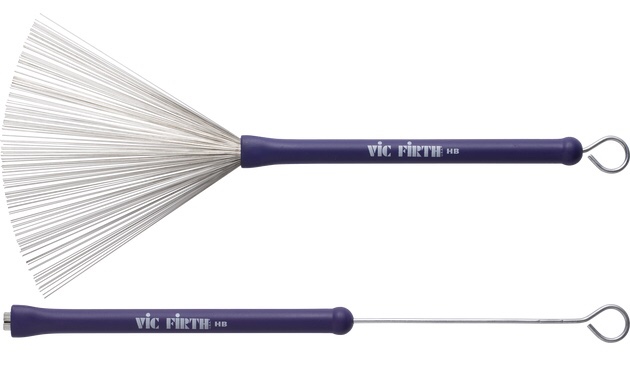
Brushes: Vic Firth Heritage Brush
This retractable brush features a rubber handle and lightweight wires.
Chimes: Musser M336 Yamaha DCM-11002 or Grover PM-3
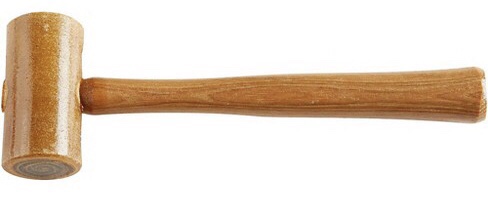
Rawhide mallets have been the standard for decades. The downside with these mallets is they can soften over time.
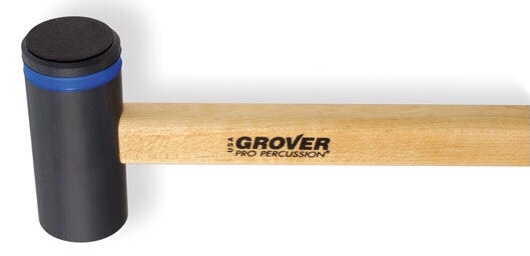
The Grover PM-3 is a PVC plastic mallet with soft and hard sides. The handle is shaped so the player instantly know the mallet is lined up with your chime rube.
I recommend having two pair on hand to better facilitate faster passages.
Suspended Cymbal: any soft yarn mallet

Honestly, this is the cheapest and easiest way to go. If you really insist on having a separate mallet for suspended cymbals, I would either choose any manufacturers’ softer model for lush rolls, or a softer yarn mallet of a different brand or model (in order to differentiate it from your marimba mallets). Harder mallets and sometimes sticks can be used for more articulate passages.
Trainable: Danmar #506 3-beater set
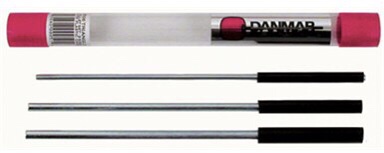
A basic set, this is inexpensive and has its own carrying tube. Personally, I recommend having two sets, in order to have matching pairs for faster rhythms on a mounted instrument. This also offers the advantage of having a spare beater on hand, as triangle beaters are by far the most often lost implement in the percussion section from my experience.
Stick or mallet bag: any brand or model
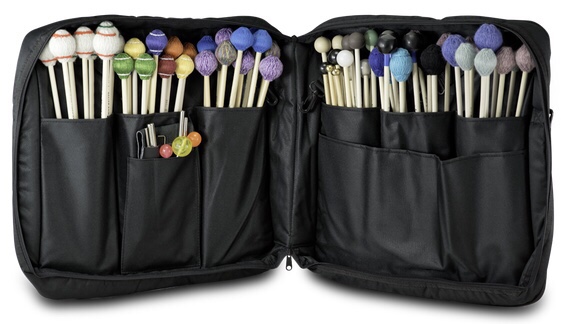
As a player, you need to have something to store and carry your sticks and mallets in. Basic stick bags will hold a pair of snare drum sticks, bell, xylophone, marimba, vibe, and timpani mallets. If you plan to have a larger collection, I would opt for a larger bag. These will hold many more implements without overcrowding them. Personally, I use multiple bags of various sizes for various sticks and mallets.
Educators, it is also a good idea to use bags to store your school implements. I’ve seen these mounted on walls in the percussion section, on keyboards, or stored in percussion cabinets.
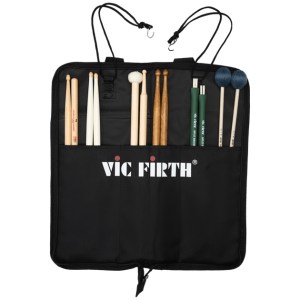
If you are looking for simplicity or a package deal, look at a prepackaged kit. Teachers, you can also look at setting up a custom package with your local store and possibly arrange a discount for your students if they order these packages from the store. There are also online retailers who have their own inexpensive lines of mallets and prepackaged kits.
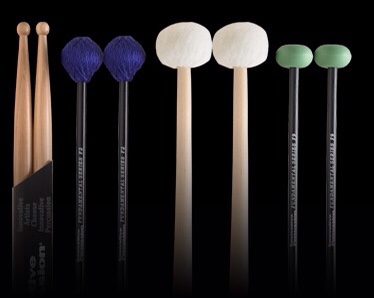

You can also ask your local music store if they can give you an extra discount if you buy a lot of items at once. I highly recommend supporting your local stores before purchasing online. Best of luck. Play on!
 Grand River Percussion Solutions “the Stream”